Thursday, 24 February 2022

Saving the Butterfly - Q&A with Author, Helen Cooper


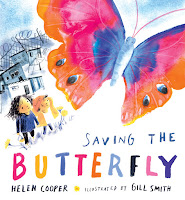
A little brother and his big sister try their best to settle in a new home, where they have nothing left from before except each other. The little one makes new friends and quickly learns to laugh again but his sister remains haunted by the shadows of their past and hides away in their broken house. Trying to help his sister, the little one catches a butterfly for her and brings it inside the house. His sister knows that she needs to set the butterfly free ... but that would mean going outside. In taking the first steps to face her fears and save the butterfly, she also begins the process of saving herself.

What was the inspiration behind Saving the Butterfly, and how did you begin writing it?

Many of my books are a gentle look at childhood anxieties: the fear of losing someone or being lost, or even the fear of a bear living under the stairs. I was an anxious child, so I try to tread lightly, with humour to counter the theme. But when Denise Johnstone-Burt at Walker Books asked if I could write a picture book text about anxiety for another illustrator, I knew here was an opportunity to write something more serious and symbolic: a story that might work best with a looser and more suggestive style of illustration than my own.

      Early on a brother and a sister came to mind: a resilient, chirpy younger child and his older sister who copes admirably for both of them in a crisis but afterwards suffers from anxiety and her memories of the past. I'm always interested in the manner different characters react to the same situation. This is the heart of the story. The lyrical phrases that I'm searching for when I write a picture book surfaced when I thought of using a butterfly as a metaphor for the girl's courage: I knew a butterfly could be a strong symbol for fragility and the spirit of survival. Then came the imagery of the dark sea to represent trauma and the rhythm flowed.

      But I had intended to write more universally about anxiety. My characters had evolved into refugees who had lost everything. There could be no easy resolution for them.  And although the dark sea is meant to represent any sort of trauma - and all the dark seas that people have fled from in the past, as well as now - I felt daunted. I worried about winding myself into some real person's tragedy. For a while, I put the story aside.

I am not a refugee, although my parents on both sides were the children of immigrants, Jewish on one side, Irish catholic on the other. Both families came over the sea with very little and found refuge in this country. I think about that often. In the end, I returned to the story because the need for home and safety and kindness is so universal. This is a gentle tale of two children saving a butterfly. And though the hope at the end of the story is fragile I hope that with Gill Smith's poignant illustrations it might become a book that children will want to share.

Can you tell us a little bit more about the writing process and what was it like to see Gill Smith’s illustrations for the first time?

This is the first book I have written but not illustrated. Just now I am working on fiction for older children, but I've been missing picture books. The prospect of collaborating with another illustrator was really intriguing. I'm most comfortable when writing in picture book form so my stories tend to be shaped around natural page turns. But apart from that structure I only allowed myself the haziest ideas about the artwork: darkness for the sea and shadows, with a rainbow brightness for the butterfly. To imagine more might have spoiled my reaction to what an illustrator could bring to the story and I was really keen not to get in their way.


Louise Jackson, the art director, sent Gill Smith's first black and white roughs during the first Covid lockdown. I was thrilled. They were stunning: simple yet strong; sensitive, and well-composed with gorgeous figure work. I had only one worry. Would she be able to carry that emotional intensity through to final full-colour art? That can be tough. 

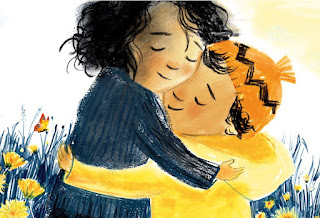
      But the final artwork was even better than I had hoped. The illustrations are gorgeous: spacious and powerful, gentle and compassionate all at once; Gill's figures are her forte, especially those so simply indicated faces full of emotion. Collaborating with Gill on this book has been a joy.  
 

A special thanks to our guest this week, Helen Cooper!
To read more about Helen Cooper go to www.helencooperbooks.co.uk.
Saving the Butterfly is now available from all good booksellers.

Wednesday, 16 February 2022

Saving the Butterfly - Q&A with Illustrator Gill Smith


A little brother and his big sister try their best to settle in a new home, where they have nothing left from before except each other. The little one makes new friends and quickly learns to laugh again but his sister remains haunted by the shadows of their past and hides away in their broken house. Trying to help his sister, the little one catches a butterfly for her and brings it inside the house. His sister knows that she needs to set the butterfly free ... but that would mean going outside. In taking the first steps to face her fears and save the butterfly, she also begins the process of saving herself.

Can you tell us more about your journey into children’s books?
 
As a child, I was in my element drawing and that never left me. However, I didn’t summon the courage to go to art school until my thirties after an English Literature degree, primary teaching and working within community arts.
 
When I graduated in 2008 with a Graphic Arts degree from Liverpool School of Art, I wasn’t sure how to find work as an illustrator. Liverpool had become the European Capital of Culture and exciting arts events were happening all over the city. By chance, I came across an amazing show in the park. An acrobatic fairy was twirling from a huge paper moon, high above the trees! There was fire, music, puppetry and I was completely enchanted. It was the creation of The Lantern Company, a community arts organisation. That night I wrote to them asking if I could work with them.
                                        
Consequently, I found myself in their old warehouse surrounded by a menagerie of giant creatures. I had run away and joined the circus at last! The next ten or so years were my artist apprenticeship, painting and making outdoor spectacles with a network of performers, designers, pyrotechnicians, musicians and community groups.
 
   
The Lantern Company 2008
 
 I was forever obsessing over children’s book illustration and I noticed in Martin Salisbury’s Children’s Picturebooks (2012) that the illustrators I so admired had studied with him at Cambridge School of Art. This discovery led to a leap of faith, a move to Cambridge to gain an MA in Childen’s Book Illustration where I was inspired by Martin, Pam Smy and many great illustrators and fellow students.
 
During the MA, I won an illustration competition I met one of the judges, Louise Jackson. I signed with an agent Claire Cartey and I was then approached by Louise shortly afterwards with the manuscript for Saving The Butterfly by Helen Cooper. I was elated that I was going to work with Walker Books, the publisher of all the beloved books I had grown up with.

 
I’m aware I make this journey to illustrating books sound quite smooth but the reality was a couple of decades of part time jobs to keep afloat whilst freelancing, financial insecurity, and a growing feeling of failure! Sometimes I worried that I was foolish for not getting a ‘proper job’ and making life easier. I’m really glad I didn’t as I am in my element once again, illustrating children’s books.
 
 
How did you begin illustrating Saving the Butterfly?
 
The poetic nature of Helen’s writing sparked my imagination straight away. It conveys big emotions with few words, inviting the reader to ask questions. Who are the little one and the bigger one, where have they come from and why are they all alone? It is an intimate story about two children but it speaks gently of the trauma experienced by unaccompanied child refugees in many parts of the world. Helen wanted the story to represent all children who have escaped from danger, not just now but in the past and sadly, those who may experience it in the future.

 
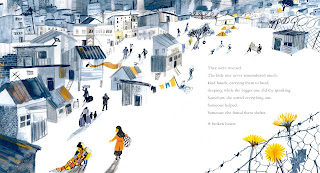
Helen was exceptionally generous throughout the process. She allowed me to find my own interpretation but was encouraging and offered insight and suggestions. I felt reassured that I could draw on both her and the Walker team to help to tell this story sensitively. I started by drawing my way into the themes of home and safety in my sketchbook. There were many versions of the ‘broken house’  with elements from refugee camps, informal tent settlements, favelas and slums. I find the fragility of such adhoc dwellings very emotive. I pieced them together, building a patchwork of temporary looking buildings that could exist anywhere in the world.
 
I also focused on the sibling relationship of the story and found myself drawing on childhood memories. My younger sister, Jen and I were close, always dressed the same and sharing a bunkbed. I remembered how protective I felt on our first day in a scary new school. She was much more adventurous than me though and could run up steep hills and climb trees where I could be quite timid. I couldn’t sleep without the security of my scruffy toy rabbit, Bobo who features in the book. I also remembered the reassurance of heavy woollen blankets and eiderdowns when we stayed overnight in my Aunty Jean’s big house and this informed the patchwork comfort blanket wrapped around the little girl. I could remember the wonder of looking closely at a worm in the mud or a ladybird on your hand and I recalled the dramatic day that my sister and I attempted to rescue a fallen baby bird. This kind of childhood stuff drifts through your mind when you are drawing for hours each day and I think some of the feelings and sensations found a way into this book.

 
I realise what a priviledged childhood I had. As I write this I am hearing on the radio of orphans from Ukraine being supported by a charity to come to the UK. More little ones and bigger ones in
trauma. And in Yemen, children are dying of malnutrition and bombs are being dropped on them, bombs made in the UK. I have been volunteering with a solidarity group of of local women called Habibti Liverpool who fundraise for the only free children’s hospital in Yemen. The hospital is run by Paediatrician Dr. Najla Al-Sonboli who lived in Liverpool while completing her training. Although offered the chance to return to safety in the UK, the medics decided they had a duty to remain and help treat the sick in a country suffering from a dire humanitarian crisis brought on by the war. I feel compelled to try and raise awareness if I can. 
See facebook@HabibtiLiverpool for more information about their work.
 
What was your favourite spread to illustrate in Saving the Butterfly?
 
The last spread was my favourite. I had become so protective of the little brother and sister having spent a lot of time with them. It was a relief to give them a more hopeful scene to play in. We didn’t want to sugar coat the reality with a neat and tidy ending but rather acknowledge the little girl’s tentative step towards her recovery. I looked at newspaper photographs of Syrian children who had found safety in a childrens centre in Lebanon. Miraculously they are smiling for the camera, singing and playing with their friends. Whilst the struggle to survive makes them older than their years there are moments where they perhaps feel safe enough to play like any child in a playground would.
 
In this spread, I imagined the potential new friendships between the children. It felt very emotional to draw the characters who, ‘on that day’, could retain their right to play.


What are your favourite picturebooks, both older and more recent?

I really enjoy the warmth of Helen Oxenbury’s characters. The family members in So Much ( Walker 1994) are just fantastic. I find Laura Carlin’s illustration in Nicola Davies The Promise very beautiful. I love her mark making and naive urban landscapes. Paula White’s, A Baker by The Sea is a book I’m very excited about. I witnessed Paula develop this during our time on the MA. It is exceptional.
 
As a child, I adored Mrs Wobble the Waitress by the Ahlbergs and read it over and over again. She wobbles uncontrollably and spills roast chicken and jelly over the bewildered guests. I’ll stop here as I could go on and on about children’s books forever.
 
-

A special thanks to our guest this week, Gill Smith!
Saving the Butterfly is now available from all good booksellers.

Wednesday, 2 February 2022

New February Picture Book Releases

Check out a selection of our February releases below! 

Saving the Butterfly
by Helen Cooper and illustrated by Gill Smith


A poetic, powerful story about a little brother and a big sister finding a new home and new hope.

A little brother and his big sister try their best to settle in a new home, where they have nothing left from before except each other. The little one makes new friends and quickly learns to laugh again but his sister remains haunted by the shadows of their past and hides away in their broken house. Trying to help his sister, the little one catches a butterfly for her and brings it inside the house. His sister knows that she needs to set the butterfly free ... but that would mean going outside. In taking the first steps to face her fears and save the butterfly, she also begins the process of saving herself.

We will have guest blog posts with Helen Cooper and Gill Smith coming over the next few weeks!

I Am Not An Octopus
by Eoin McLaughlin and illustrated by Marc Boutavant

Terry is not an octopus. He's just a regular guy with a few extra arms. Yes, he loves tuna and yes, he'd love to visit Super Octopus Fantasea Adventure World. But octopuses live in the sea. And Terry is afraid of water. Maybe he should learn to swim?

A very silly story about being brave, facing your fears and accepting who you really are.

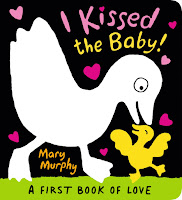
I Kissed the Baby!
by Mary Murphy


"I saw the baby! Did you see the baby?" "Yes! I saw the baby, the teeny, weeny thing." "I tickled the baby! Did you tickle the baby?" "Yes! I tickled the baby, the wriggly, giggly thing!" Join in the fun in this shout-out-loud board book for the very youngest of children. Now available as a board book.

Little Fish's Ocean
by Lucy Cousins


Explore the ocean with Little Fish and meet new friends along the way! Swim in shallow rock pools and lush kelp fields; dive down to the ocean depths and play in cold seas before finally heading home to Mummy Fish in the colourful coral reef. With large flaps that open out to reveal panoramic underwater scenes, this book is a perfect way to share the wonderful diversity of marine life with the very young.

Chirp
by Mary Murphy


We all have a voice and a song to sing! In this joyful, rhythmical picture book, Mary Murphy brings to life the beauty of the dawn chorus and shows that even the smallest of birds – and the littlest of readers – have a powerful voice. With stunning graphic artwork set against a rainbow of sky colour, Chirp heralds a new day and new beginnings.

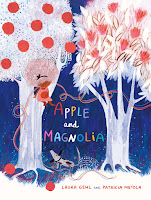
Apple and Magnolia
by Laura Gehl and illustrated by Patricia Metola


Britta’s two favourite trees, Apple and Magnolia, are best friends. Britta can't explain how she is so sure about the friendship, but deep down in her heart, she knows it is true. Then, one day, Magnolia’s branches start to droop. Her bark grows patchy. Her leaves turn brown… Can Britta find a way to help Magnolia survive the cold winter months? With glowing illustrations from illustrator Patricia Metola, this gentle story explores the mystery of trees, the magic of nature, and one girl’s hope, determination and nurturing spirit.


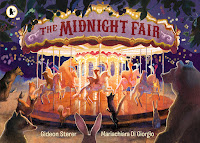
The Midnight Fair
by Gideon Sterer and illustrated by Mariachiara Di Giorgio


Far from the city, but not quite in the countryside, lies a fairground. When night falls, and the fair is empty, something unexpected happens. Wild animals emerge from the trees, a brave raccoon pulls a lever, and the rollercoasters and rides explode back into bright, neon life. Now it’s time for the woodland creatures to have some fun…
Now available in paperback.

Click here to read our Q&A with Gideon Sterer!


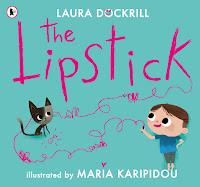
The Lipstick
by Laura Dockrill and illustrated by Maria Karipidou


Exploring his mother’s bedroom, a little boy discovers THE LIPSTICK. It begins on his lips, where it looks very good – MWAH! But then it goes for a little walk … squiggle, squiggle … on the mirror … scribble scribble … on the shiny floorboards … smudge smudge. And even on the fluffy cat. Uh-oh! What will happen when Mum, Dad and big sister see all this mess? From the team behind Angry Cookie comes a hilarious and joyous story all about artistic expression, self-confidence and supportive, accepting parenting.
Now out in paperback.

Click here to read our Q&A with Maria Karipidou and here for our activity sheets!


Can Bear Ski?
by Raymond Antrobus and illustrated by Polly Dunbar

This new paperback edition includes an illustrated BSL alphabet.
Boy Bear cannot hear Dad Bear coming to wake him up in the morning but he can feel the floor vibrate with his heavy footstepsHe can only grasp little bits of what his teacher says to him at school. He cannot catch what his friends are laughing at. And, all the time, Boy Bear keeps hearing the question, “Can Bears ski?” What does it mean? With the support of Dad Bear, Boy Bear visits an audiologist and, eventually, he gets hearing aids. Suddenly, he understands the question everyone has been asking him: "CAN YOU HEAR ME?"

Click here to read our Q&A with Polly Dunbar!


All of our February releases are now available from all good booksellers.

Tuesday, 18 January 2022

Owls Are Cool - Guest Blog Post from Timothy Knapman

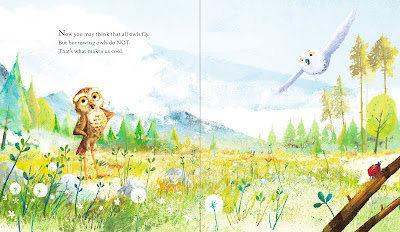
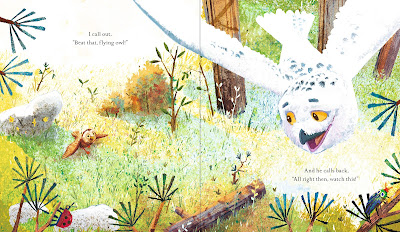
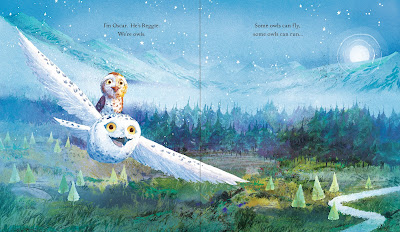
Oscar is an owl; a COOL owl. And cool owls DO NOT fly – they RUN. ZOOOOOOOOOM! So when snowy owl Reggie comes along, swooping and swooshing through the sky, Oscar’s not impressed at all. But when Reggie crashes into a tree, Oscar discovers that maybe they are not so different from one another after all…

A funny and heartwarming story about how being different is cool. It introduces the burrowing owl and their spectacular legs and beautiful burrows to small children.

Guest blog post from Timothy Knapman 


Timothy Knapman here, hello! I’d like to tell you a bit about my new book, Owls Are Cool, which is illustrated by the mighty Jason Cockcroft.

Ideas for picture books can come from anywhere, but it’s often something visual. I talked to a friend about stories, and she showed me a picture of a burrowing owl. There was something proud but vulnerable in the owl’s face, and at once, I could hear a voice in my head that seemed to fit him. Getting a fix on your main character is a good start, but you still need a story. Stories aren’t just a string of events that happen for no reason, they’re like a machine in which each moving part works in harmony with the rest, and they need a motor to drive them. That motor is usually a problem that the main character has to solve. So I needed a problem to power my story. I wondered what this proud animal would feel if he saw an owl that could fly – admiration, yes, but underneath it also loss as he watched something he couldn’t do. How was he going to deal with that? That’s when I knew I had a story.

 Research is an integral part of the process of writing picture books. If I’m writing about a particular animal, I’ll read as much about them as I can before I start. It’s an excellent way to get ideas, and I think stories feel richer if they include a few particular, telling details. But I’m not bound by the facts when I tell my stories because – and this is a big secret, so don’t let it get around – picture books about animals aren’t really about animals.

Take my new book; its hero is a burrowing owl who admires/envies, and then makes friends with, a flying owl. Does that sort of thing happen in the wild? I have no idea. Because I’m not really writing about animals at all, I’m writing about how a friendship begins. The heart of my story – the hero’s mixture of admiration, showing off, and vulnerability – comes not from any biology textbook about burrowing owls but from my memory of trying to make friends when I was a little boy. 

 Writing a picture book is like writing a song. Like songs, picture books can’t go on very long; they need some kind of quirk or novelty that hooks you, and, most of all, they have to be something you’re going to want to hear over and over again (young readers love repetition). I’ve been lucky enough to write a few songs and even luckier to have written them with some very talented composers, and it’s in the collaboration that song- and picture book-writing are most alike. I don’t try to do everything in my lyrics – lyrics are not poetry, they are not meant to stand on their own; music carries at least half of the song’s meaning – and it’s the same with illustrations, such as Jason Cockcroft's glorious images for our new book. I would never tell Jason what to draw; I have no fixed ideas about what my characters and their world look like, as long as they fit the story. I want to be surprised. And the result is always far better than I was expecting – a book that sings.

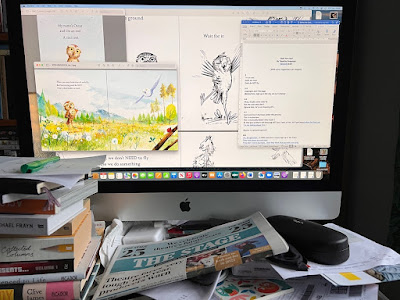
 This is a picture of my desk, where I’ve written many books, including my latest. I’ve given up trying to keep it tidy because I realised recently that the chaos is good for work. Yes, I know I have to dig under piles of papers to find a pen that works, and I’ll be snatching time where I can to read five books on wildly different subjects all at the same time, but the sense of urgency – of so many deadlines, and so little time – is a great spur to get working. If you have too much time to think about a project, you often find yourself thinking about it and not writing it. And I’m lucky enough to work on a great variety of different projects. Going from a picture book to a non-fiction book to an opera adaptation to a musical means that if I get stuck on one thing, there’s always somewhere else to go. And the answer to a problem in project A often presents itself after I’ve given up and gone over to work on project C. During the first lockdown, I had no deadlines, a nice tidy desk and time to read widely for pleasure. And I didn’t write a single usable word.

-

A special thanks to our guest this week, Timothy Knapman!
Owls Are Cool is now available from all good booksellers.

Thursday, 13 January 2022

I Talk Like a River by Jordan Scott and illustrated by Sydney Smith

I Talk Like a River
by Jordan Scott and illustrated by Sydney Smith


After a day of being unable to speak when asked, and of being stared at, a boy and his father go to the river for some quiet time. "It's just a bad speech day," says Dad. But the boy can't stop thinking about all the eyes watching his lips twisting and twirling. When his father points to the river bubbling, churning, whirling and crashing, the boy finds a way to think about how he speaks. Even the river stutters. Like him. "I talk like a river," he says.
Now available in paperback!

Click here to read our Q&A with Jordan Scott.
Also from Sydney Smith:

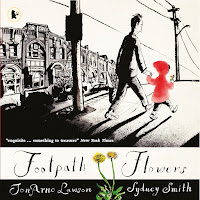
Footpath Flowers
by JonArno Lawson and illustrated by Sydney Smith


In this wordless, beautifully illustrated picture book from award-winning poet JonArno Lawson, a little girl collects wild flowers while her distracted father pays her – and their surroundings – little attention. Each flower the little girl gathers becomes a gift for a person or animal, and whether the gift is noticed or ignored, both giver and recipient are transformed by their encounter. An ode to the importance of small things, small people and small gestures, Footpath Flowers is a quiet but powerful testament to the joy that children can find in ordinary things and the mutual value of giving.

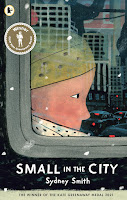
Small in the City
by Sydney Smith


WINNER OF THE 2020 KATE GREENAWAY MEDAL

Being small can be overwhelming in a city. People don't see you. The loud sounds of the sirens and cyclists can be scary. And the streets are so busy it can make your brain feel like there's too much stuff in it. But if you know where to find good hiding places, warm dryer vents that blow out hot steam that smells like summer, music to listen to or friends to say hi to, there can be comfort in the city, too. We follow our little protagonist, who knows all about what it's like to be small in the city, as he gives his best advice for surviving there. As we turn the pages, Sydney Smith's masterful storytelling allows us to glimpse exactly who this advice is for, leading us to a powerful, heart-rending realization...

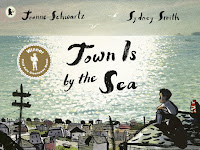
Town is by the Sea
by Joanne Schwartz and illustrated by Sydney Smith


WINNER OF THE 2017 KATE GREENAWAY MEDAL

Stunning illustrations by Sydney Smith, the award-winning illustrator of Footpath Flowers, show the striking contrast between a sparkling seaside day and the darkness underground where the miners dig. This beautifully understated and haunting story brings a piece of mining history to life. The ever-present ocean and inevitable pattern of life in a mining town will enthral children and move adult readers, as a young boy wakes up to the sound of the sea, visits his grandfather's grave after lunch and comes home to a cosy dinner with his family, but all the while his mind strays to his father digging for coal deep down under the sea.

-

Available to buy from all good booksellers.

Tuesday, 11 January 2022

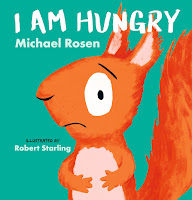
I Am Hungry by Michael Rosen and illustrated by Robert Starling


I am Hungry
by Michael Rosen and illustrated by Robert Starling


Look out, this squirrel is HUNGRY. So hungry it could eat boiled rice, chocolate mice, a gingerbread man ... even a frying pan! Is there anything it WON'T eat?


A rollicking ride of increasing absurdity and imagination, this hilarious picture book captures the occasional outlandishness of toddler moods. Based on the popular poem from A Great Big Cuddle, I Am Hungry is a terrific read-aloud from the master of rhyme, Michael Rosen, coupled with brilliantly bold illustration from Robert Starling.
I am Angry
by Michael Rosen and illustrated by Robert Starling

This kitten may look cute and cuddly, but better beware: they're angry. Really angry. Angry, angry, angry! And this isn't any old "angry". This is a jump-up-and-down, roll-on-the-ground kind of angry. This is a spider-scaring, tiger-scaring kind of angry. This is a burst-balloon-ing, SQUASH-THE-MOON-ING kind of angry...


As surreal as things may get, this is also the kind of angry that parents of toddlers will recognize – a bad mood that comes out of nowhere, escalates wildly, then disappears as suddenly as it arrived. 


Based on the popular poem from A Great Big CuddleI Am Angry combines Michael Rosen's brilliant rhymes and anarchic imagination, Robert Starling's perfect knack for character and a reassuring message: anger may feel overpowering, but it doesn't last forever.


-

I Am Hungry and I Am Angry are now available from all good booksellers!

Thursday, 6 January 2022

New January Picture Book Releases

Kick off the new year right with a selection of our January releases below! 

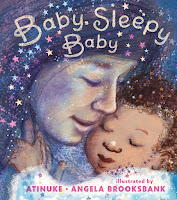
Baby, Sleepy Baby
by Atinuke and illustrated by Angela Brooksbank


Baby, sleepy baby, I'll sing down the stars
Till they dance right into your room.

A beautiful and lyrical book that celebrates the warmth and tenderness of wrapping baby in night-time's embrace. Based on a Nigerian lullaby sung to Atinuke by her father, this story delights in the magical moments shared with a whole family and their baby at bedtime.

Isabelle and the Crooks
by Michelle Robinson and illustrated by Chris Mould

Isabelle Crook is a very good little girl who would never dream of breaking the law. Her family, on the other hand, are the stealthiest, most cunning burglars around! Can Isabelle ever feel like one of the gang – a true Crook – while staying true to herself? Irreverent and adventurous, this picture book comedy sees everyone tip-toeing about at night and is brought to life by Chris Mould's expressive, gloriously detailed illustrations.


The Think Ups
by Claire Alexander


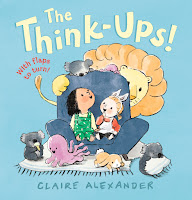
It's a rainy day, and Anna and Kiki are stuck indoors, wondering what to play next. Suddenly, Kiki has an idea for a new game. "All you have to do," she explains, "is think up a Think-Up, and it will appear!" And she thinks up … BUNNIES! Then they conjure up the most marvellous, magnificent MOOSE! And octopi! And nine HUNGRY koalas! Hmm … is it possible to UN-think a Think-Up? With half-cut pages that make for funny surprises at every turn, this is a fresh celebration of imaginary play for the youngest of children.

I am Hungry
by Michael Rosen and illustrated by Robert Starling


Look out, this squirrel is HUNGRY. So hungry it could eat boiled rice, chocolate mice, a gingerbread man ... even a frying pan! Is there anything it WON'T eat?

A rollicking ride of increasing absurdity and imagination, this hilarious picture book captures the occasional outlandishness of toddler moods. Based on the popular poem from A Great Big Cuddle, I Am Hungry is a terrific read-aloud from the master of rhyme, Michael Rosen, coupled with brilliantly bold illustration from Robert Starling.

Tales from the Inner City
by Shaun Tan


Where can we live if not in each other's shadow?

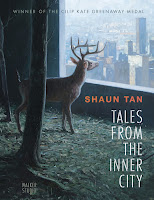
World-renowned artist Shaun Tan applies his extraordinary talent to a reflection on the nature of humans and animals and our urban co-existence. From animals as disparate as crocodiles, tigers, bees and whales, this is a dark and surreal exploration of the perennial love we feel and destruction we inflict – and shows how animals, whether domestic, feral or really wild, can save us, and how we are entwined, for better or for worse. Tales from the Inner City is a truly masterly work, bearing all of Shaun Tan's trademark wit and poignancy in both its prose and exquisite illustrations.

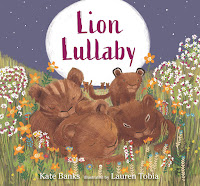
Lion Lullaby
by Kate Banks and illustrated by Lauren Tobia


The sun begins to set on the savannah, and ten little lions must find their way home before dark. One by one, lion cubs emerge from trees, past bouncing monkeys and braying zebras. They cross a stream, watch a herd of thundering wildebeest, and explore the darkening beauty of the landscape. As the moon rises, ten little lion cubs curl up together just in time for bedtime, under their mothers' watch in a space that is cosy and warm. Kate Banks's gorgeously melodic text, paired with Lauren Tobia's charming illustrations, create a lullaby to ensure the sweetest of dreams.

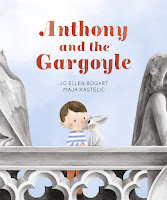
Anthony and the Gargoyle
by Jo Ellen Bogart and illustrated by Maja Kastelic


Anthony wakes up one morning to find his favourite rock has cracked open – and it's hollow! He discovers a strange-looking hatchling inside, and the two become fast friends. When Anthony asks his mother where the rock came from, she shows him photos from their trip to Paris, including Notre-Dame Cathedral, with familiar-looking forms perched on top. Could Anthony's new friend be a gargoyle?

This magical wordless story is brought to life in stunning, silent, hand-painted panels and is a touching tale of true friendship and letting go.

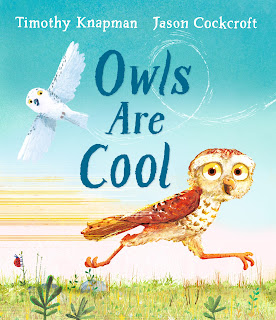
Owls Are Cool
by Timothy Knapman and illustrated by Jason Cockcroft

Oscar is an owl, a COOL owl. And cool owls DO NOT fly – they RUN. ZOOOOOOOOOM! So when snowy owl Reggie comes along, swooping and swooshing through the sky, Oscar's not impressed at all. But when Reggie crashes into a tree, Oscar discovers that maybe they are not so different from one another after all…

A funny and heartwarming story about how being different is cool. It introduces the burrowing owl and their spectacular legs and beautiful burrows to small children.

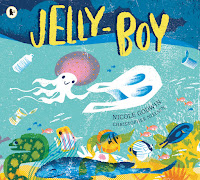
Jelly-Boy
by Nicole Godwin and illustrated by Christopher Nielsen


What happens when a jellyfish falls in love with a plastic bag she mistakes for a jelly-boy? Jelly-Boy is different. He is big and strong. And not as wobbly as the other Jelly-Boys. By the time Jelly-Girl discovers the dangerous truth about her new friend, it may already be too late.

This is an inventive approach to tackling a conservation issue that is plaguing our world: too much plastic in the ocean. Told in a kid-friendly and humorous way, this is a story with the potential to encourage dialogue around an important issue.

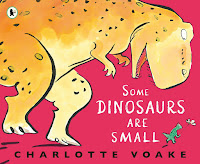
Some Dinosaurs Are Small
by Charlotte Voake


Some dinosaurs are small, and some dinosaurs are BIG. Some dinosaurs have tiny teeth for munching leaves, and some dinosaurs have pointy teeth for munching … OTHER dinosaurs! UH-OH. Some dinosaurs need to RUN!

In pure pantomime spirit, children will want to cry out, "He's behind you!" in this bright, bold and thrilling picture book from one of the most acclaimed contemporary children's bookmakers, Charlotte Voake.
Now out in paperback.


All of our January releases are now available from all good booksellers.